
- 6
Mount Kilimanjaro
The Roof of Africa
Stand above the clouds. Walk through five ecological zones. Challenge yourself on Africa’s highest mountain and experience the extraordinary journey to Uhuru Peak.
Rising dramatically above the plains of northern Tanzania, Mount Kilimanjaro is more than a mountain. It is a journey through changing landscapes, climates and experiences from lush rainforest to alpine desert and finally the summit of Africsa.
01. ABOUT KILIMANJARO NATIONAL PARK
Where Africa Reaches the Sky
Kilimanjaro National Park protects Mount Kilimanjaro, the highest mountain in Africa and one of the world’s great natural landmarks.
The mountain rises to 5,895 meters (19,341 ft) above sea level and stands remarkably isolated above the surrounding plains. The park covers approximately 75,575 hectares according to UNESCO, while TANAPA describes the wider national-park area as approximately 1,712 km² following boundary expansion.
UNESCO World Heritage Centre +1
Kilimanjaro is a volcanic massif made up of three major volcanic features:
Kibo – 5,895 m
The highest point and home to Uhuru Peak, the summit of Mount Kilimanjaro.
Mawenzi- 5,149 m
A rugged volcanic peak with dramatic rocky formations.
Shira – 3,962 m
The oldest of the three volcanic features, forming the spectacular Shira Plateau.
Tanzania Parks
Kilimanjaro National Park was established in 1973, officially opened for tourism in 1977 and became a UNESCO World Heritage Site in 1987.
02. THE FIVE ECOLOGICAL ZONES
One Mountain, Five Worlds
One of the most remarkable things about climbing Kilimanjaro is watching the environment transform as you gain altitude.
1. Cultivation & Lower Slopes
The journey begins around the lower mountain, where agricultural landscapes and local communities surround Kilimanjaro.
As you climb, the environment gradually changes.
2. Montane Forest
Lush rainforest surrounds the lower slopes of the mountain.
You may encounter:
Colobus monkeys
Blue monkeys
Bushbuck
Duiker
Buffalo
Numerous bird species
TANAPA identifies the montane forest as an important habitat for wildlife and birds.
Tanzania Parks
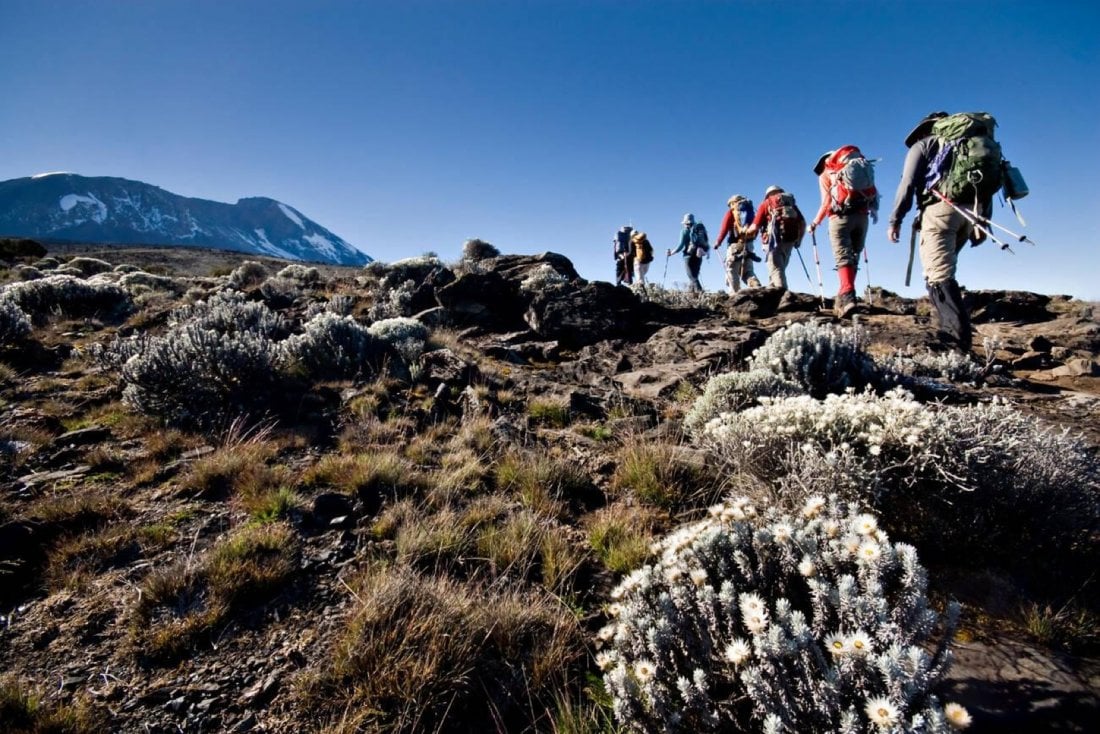
3. Heath & Moorland
The dense forest gives way to open heath and moorland.
Giant lobelias and senecios create an almost otherworldly landscape.
4. Alpine Desert
Vegetation becomes increasingly sparse.
The landscape becomes rocky, dry and dramatic as you approach the higher elevations.
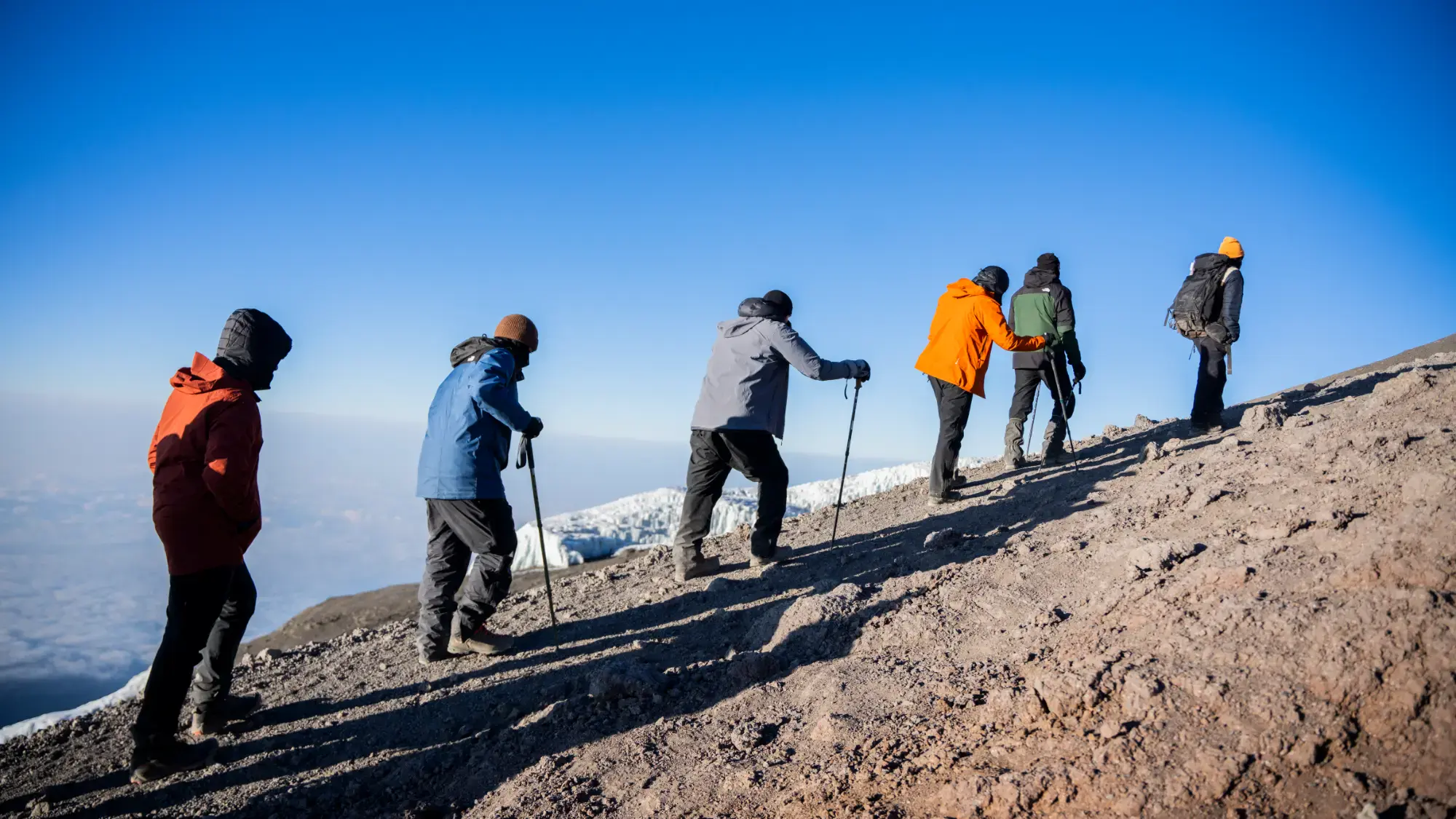
5. Arctic / Summit Zone
At the highest elevations, the environment becomes extremely cold and exposed.
This is the world of:
Ice. Rock. Snow. Wind. Thin air.
And finally:
Uhuru Peak 5,895 m
The highest point in Africa.
UNESCO recognizes these major vegetation zones as one of the features contributing to Kilimanjaro’s outstanding natural value.
UNESCO World Heritage Centre
03. THE KILIMANJARO CLIMB
The Journey to Uhuru Peak
Climbing Kilimanjaro is not simply about reaching the summit.
It is about the journey.
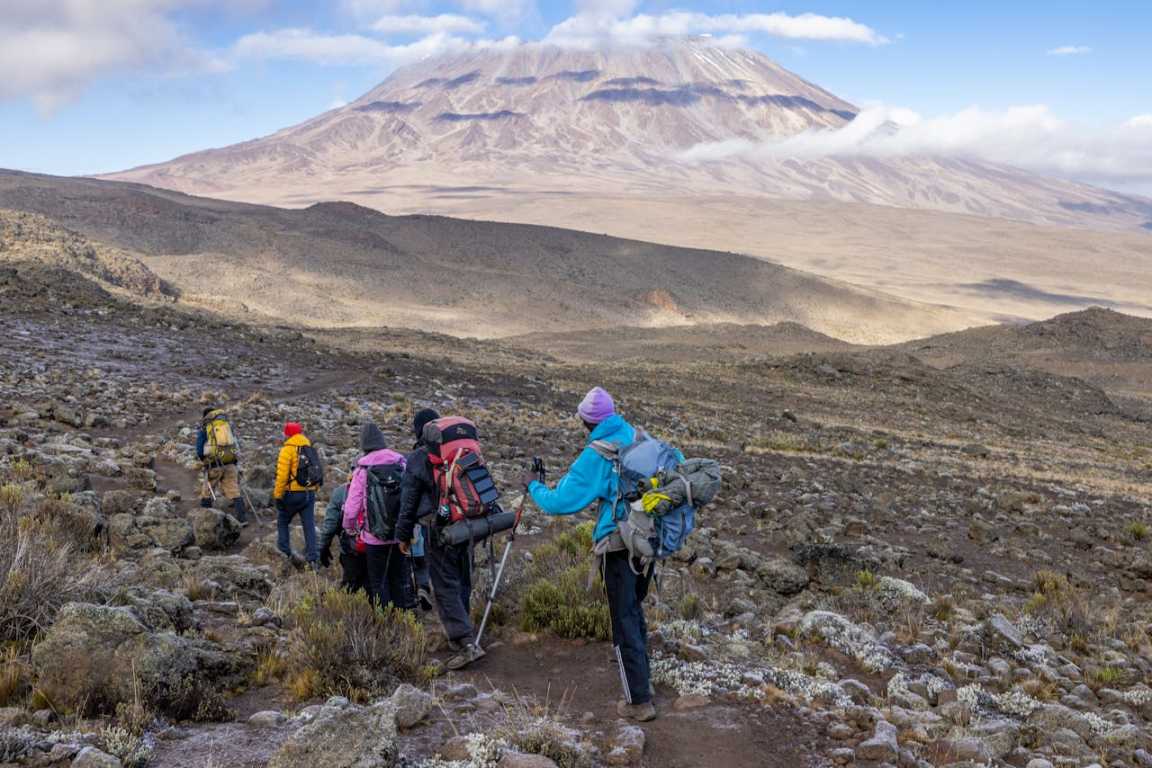
Each day takes you into a different environment, gradually higher into the mountain.
You walk through forest.
You cross moorland.
You enter alpine desert.
Then you face the final ascent toward the summit.
Summit Day
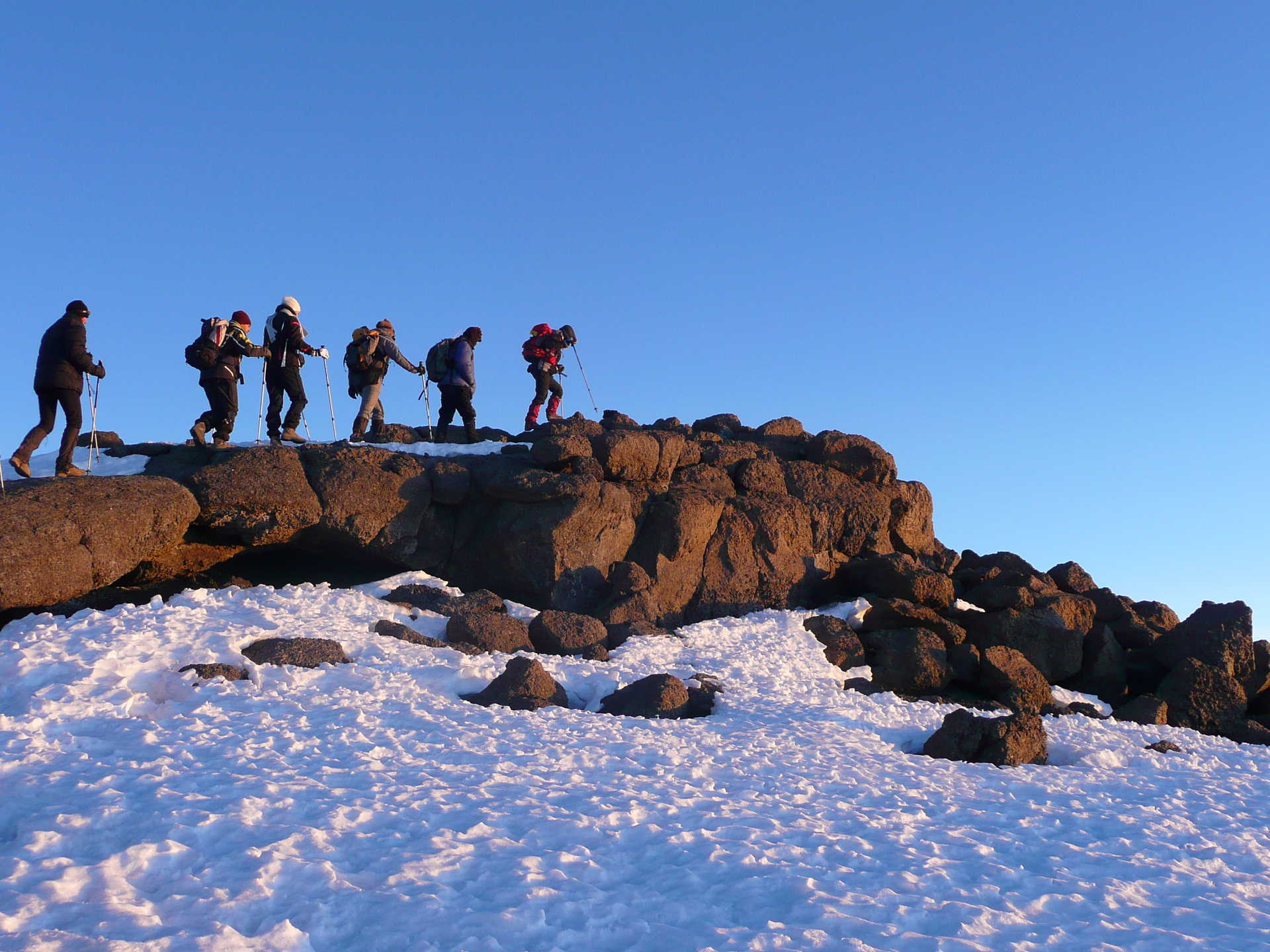
For many climbers, summit night begins in darkness.
You start slowly, following your guide toward the summit while the temperature drops and the altitude increases.
After hours of climbing, the landscape begins to brighten.
And then:
Uhuru Peak.
5,895 metres.
Africa beneath your feet.
The summit experience is highly dependent on weather, altitude, fitness, acclimatization and individual circumstances. Reaching the summit cannot be guaranteed.
04. KILIMANJARO ROUTES
Choose Your Path to the Summit
There are several routes to the summit, and each offers a different experience.
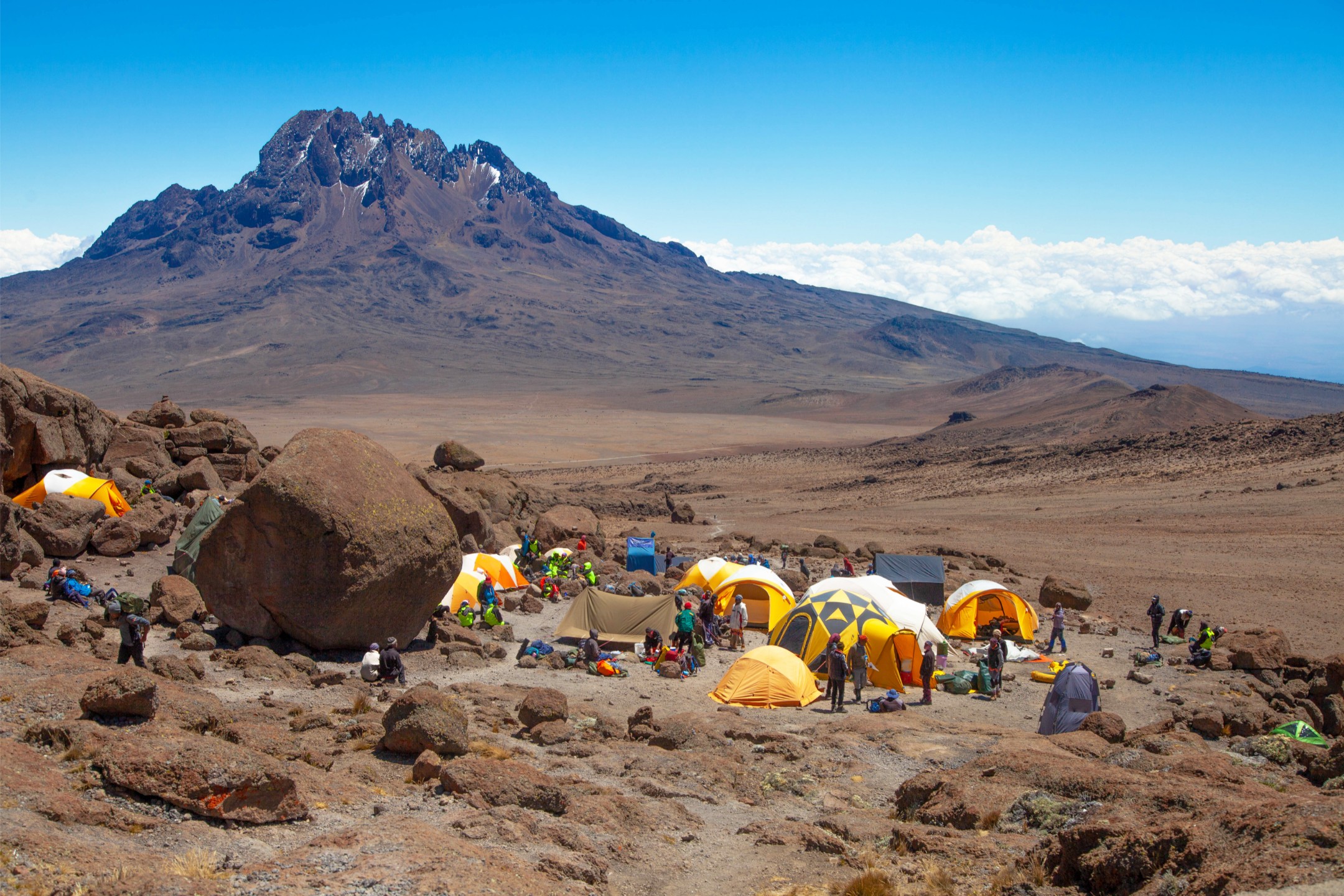
MACHAME ROUTE
Often known for its scenic landscapes and varied terrain.
Best suited for:
Travellers seeking a scenic trekking experience and a route with opportunities for acclimatization.
Typical duration:
6–7 days, depending on itinerary.
LEMOSHO ROUTE
A scenic route approaching the mountain from the western side.
It offers a longer approach and can allow a more gradual acclimatization profile.
Best suited for:
Travellers wanting a scenic, longer trek.
Typical duration:
7–8 days.
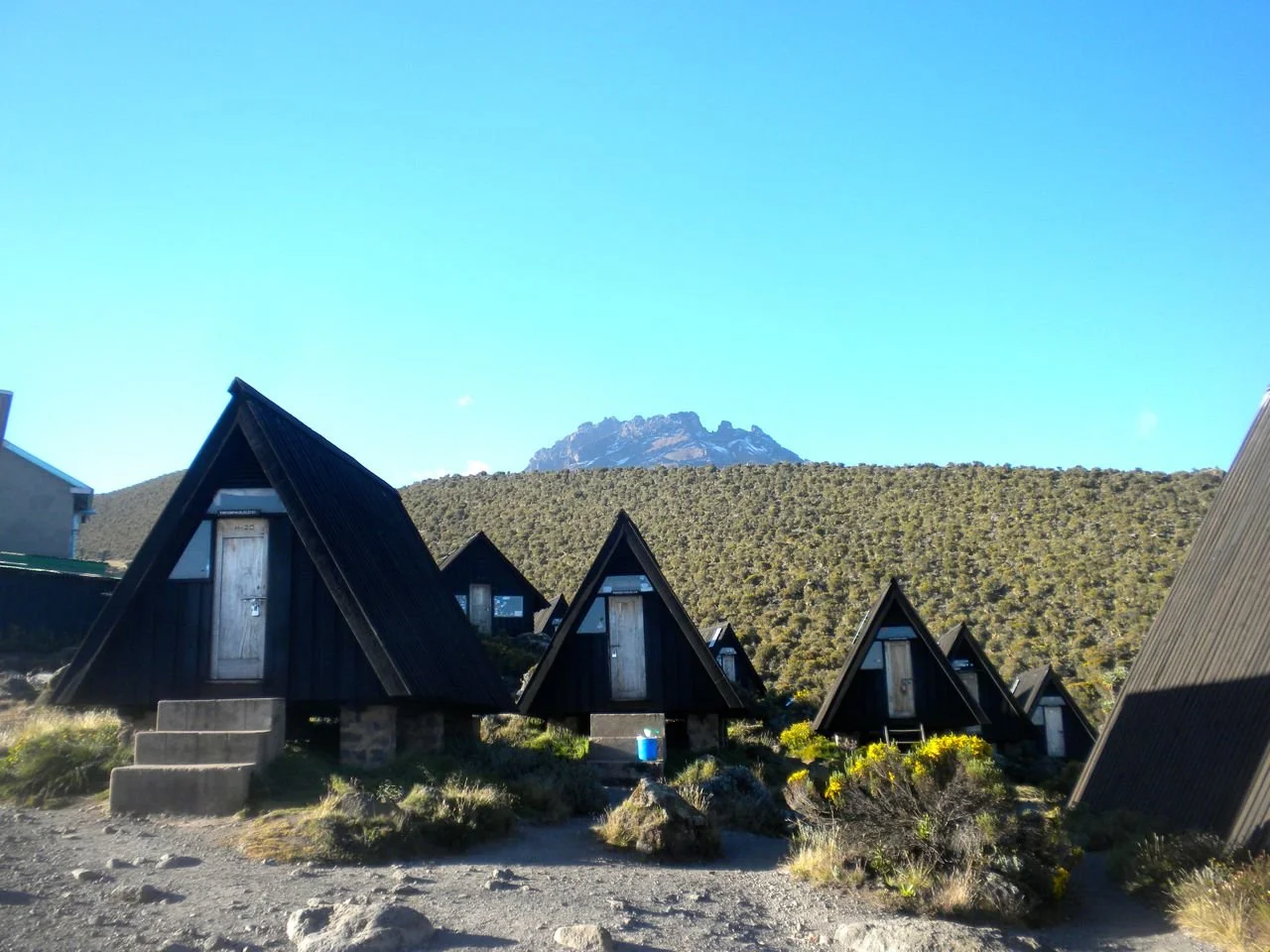
MARANGU ROUTE
Known as the “Coca-Cola Route”, Marangu uses mountain huts rather than tented camps.
Best suited for:
Travellers who prefer hut accommodation.
Typical duration:
5–6 days, although adding acclimatization time can be beneficial.
RONGAI ROUTE
Approaching from the northern side of Kilimanjaro near the Kenya border.
It offers a different perspective of the mountain.
Best suited for:
Travellers looking for a quieter approach and a different mountain landscape.
UMBWE ROUTE
A shorter and steeper approach.
It is more demanding and generally better suited to experienced trekkers.
SHIRA ROUTE
Approaches through the Shira Plateau and is generally associated with longer itineraries.
Our Recommendation
We don’t choose a route simply because it is the shortest.
We consider:
Your experience + available days + preferred scenery + acclimatization needs + overall trekking style.
05. BEST TIME TO CLIMB KILIMANJARO
When Should You Climb?
Kilimanjaro can be climbed throughout much of the year, but weather conditions vary.
January – March
Generally a popular period for climbing, with opportunities for clear mountain views.
June – October
Another commonly chosen period, coinciding with generally drier conditions.
Good for:
Trekking • Clearer views • Photography
November – December
Short rains may occur, although climbing remains possible.
April – May
The long-rain period can bring wetter conditions and more challenging trekking conditions.
Important
Mountain weather can change quickly.
A successful Kilimanjaro itinerary should allow appropriate acclimatization and preparation rather than focusing only on the shortest possible climb.
06. BEYOND THE SUMMIT
Kilimanjaro Is More Than Climbing
You don’t necessarily have to summit Kilimanjaro to experience the mountain.
Forest Nature Walks
Explore the lower mountain and montane forest without undertaking a full summit expedition.
Short Mountain Walks
For travellers with limited time, shorter experiences can provide a taste of Kilimanjaro.
Shira Plateau
Explore the dramatic landscape of the Shira Plateau without completing a full summit itinerary, subject to applicable park arrangements.
Mountain Cycling
TANAPA identifies mountain cycling as one of the activities available in the park, including routes for summit-bound and non-summit visitors.
Tanzania Parks
Mawenzi
For highly experienced mountaineers, Mawenzi offers a more technical mountain experience.
07. WILDLIFE, FORESTS & MOUNTAIN LANDSCAPES
A Mountain Full of Life
Kilimanjaro may be famous for its summit, but the lower mountain supports an impressive range of wildlife and plant life.
Wildlife
Depending on the area and conditions, you may encounter:
Black-and-white colobus monkeys
Blue monkeys
Buffalo
Bushbuck
Duiker
Elephants in the wider mountain ecosystem
Other forest species
TANAPA also notes leopard and spotted hyena in the park, although these are elusive and rarely seen.
Tanzania Parks
Birdlife
The mountain’s forests provide habitat for numerous bird species, including sunbirds, raptors and other montane birds.
Tanzania Parks
Unique Vegetation
One of the most memorable features of the trek is the vegetation change.
From:
Rainforest → Heath → Moorland → Alpine Desert → Summit
Every day’s scenery feels different.
08. PLAN YOUR KILIMANJARO ADVENTURE
How Many Days Do You Need?
The number of days depends on your route and itinerary.
5–6 Days
Shorter summit itineraries are available, although they provide less time for acclimatization.
7 Days
A popular duration for travellers wanting a balance between trekking time and acclimatization.
8+ Days
Longer itineraries can provide additional time on the mountain and a more gradual ascent.
TANAPA notes that reaching Kibo can take approximately 5–8 days depending on the route, with more days generally allowing greater opportunity for acclimatization.
Tanzania Parks
Getting There
Kilimanjaro National Park is accessible from Moshi and Arusha, with major access points including Marangu, Machame, Lemosho/Londorossi and Rongai. Kilimanjaro International Airport is the principal international gateway for many climbers.
Tanzania Parks
Before & After the Climb
Most itineraries include:
Airport → Moshi/Arusha → Mountain → Moshi → Departure
You can also combine your climb with:
Kilimanjaro only
Kilimanjaro + Safari
or:
Kilimanjaro + Safari + Zanzibar
The ultimate Tanzania journey:
Mountain → Wildlife → Indian Ocean
Custom Kilimanjaro Climb
Tell us your dates, preferred route and available time, and we’ll build the climb around your journey.
09. WHY CLIMB KILIMANJARO WITH MWEMEZI?
More Than Reaching the Summit
At Mwemezi African Safaris, we understand that a Kilimanjaro climb is a serious journey that requires preparation, organization and the right mountain team.
Our goal is to make your experience safe, well-organized, comfortable and memorable, while respecting the mountain and the people who work on it.
Why Climb With Mwemezi?
Experienced Mountain Team
Your climb is supported by trained mountain guides and a dedicated support team.
Carefully Planned Routes
We help you select an itinerary that matches your available time and trekking experience.
Acclimatization-Focused Planning
We don’t encourage rushing the mountain simply to reduce the number of days.
Professional Mountain Support
Guides, porters and camp arrangements are coordinated as part of your climb.
Pre-Climb Preparation
We’ll help you understand what to expect, what to pack and how to prepare.
Safari & Zanzibar Extensions
Your Kilimanjaro adventure can become part of a complete Tanzania journey.
Mwemezi African Safaris
Authentic & Memorable.
FREQUENTLY ASKED QUESTIONS
How high is Mount Kilimanjaro?
Mount Kilimanjaro’s highest point, Uhuru Peak on Kibo, is 5,895 metres (19,341 feet) above sea level.
UNESCO World Heritage Centre
Is Kilimanjaro difficult to climb?
Kilimanjaro is a serious high-altitude trek. The physical challenge varies by route, itinerary and individual, while altitude is an important consideration.
Do I need previous climbing experience?
Technical mountaineering experience is not required for the standard trekking routes, but good preparation and fitness are important.
What is the best route?
There is no single route that suits everyone. Route choice depends on available time, scenery preferences, trekking experience and acclimatization strategy.
How many days should I spend on Kilimanjaro?
Longer itineraries generally allow more time for acclimatization. Many climbs are planned for around 6–8 days, depending on route.
Tanzania Parks
Can I climb Kilimanjaro with no hiking experience?
Some first-time trekkers successfully climb Kilimanjaro, but you should prepare physically and understand the demands of high altitude.
What happens if I experience altitude sickness?
Altitude-related symptoms should be taken seriously. Your mountain team should monitor your condition and follow appropriate safety procedures, including descent when necessary.
Can I climb Kilimanjaro and go on safari afterward?
Absolutely.
A popular combination is:
Kilimanjaro → Tarangire → Ngorongoro → Serengeti
Can I combine Kilimanjaro with Zanzibar?
Yes. After your climb, you can continue to Zanzibar for a beach holiday.
Is Kilimanjaro open all year?
TANAPA states that the park is open year-round, although weather conditions vary and some periods are generally more favorable for trekking than others.
Duration
6 Days
Duration
9 Days
Duration
7 Days
Duration
6 Days
Duration
8 Days
Duration
7 Days